
San Francisco's Hidden Staircases: 9 Climbs, One Day
Nine of San Francisco's hidden public staircases in one day — mosaic art, 360° views, and streets you can only reach on foot.
About This Route
San Francisco has more than 900 public staircases, and most visitors never climb one. We spent a day tracking down nine of the best — from a Bernal Heights stairway that used to be an illegal dumping ground, to the city's most famous mosaic steps, to a pair of Telegraph Hill climbs that end at Coit Tower.
Some are works of art. Some are just concrete. All of them are free, open to anyone, and connect streets that cars can't reach. This is urban hiking at its best: no trailhead, no permit, and a 360° view of the whole city if you're willing to climb for it.
Why Staircases Count as Hiking
Here's the thing that surprised us: this was a harder day than most trail hikes we do.
San Francisco's staircases exist for a practical reason — the hills are too steep for streets, so the city built stairs instead. Some of these connect neighborhoods. Some are the only way residents can get to their own front doors. There's no vehicle access to many of the houses along them, which means everything — groceries, furniture, appliances — gets carried up by hand.
You don't need a car, a permit, a trail pass, or special gear. You need shoes and a willingness to climb. For anyone who thinks adventure requires a wilderness permit and a four-hour drive, this is the counterargument.
The Nine Staircases
This was a long and tiring day for us. We visited some of the most scenic stairs in San Francisco. There are plenty more worth visiting that we may film. Several of these stairs are close enough where you can park and explore them together. There are also published urban hikes that traverse the city and utilize some of the stairs we explore in this video.
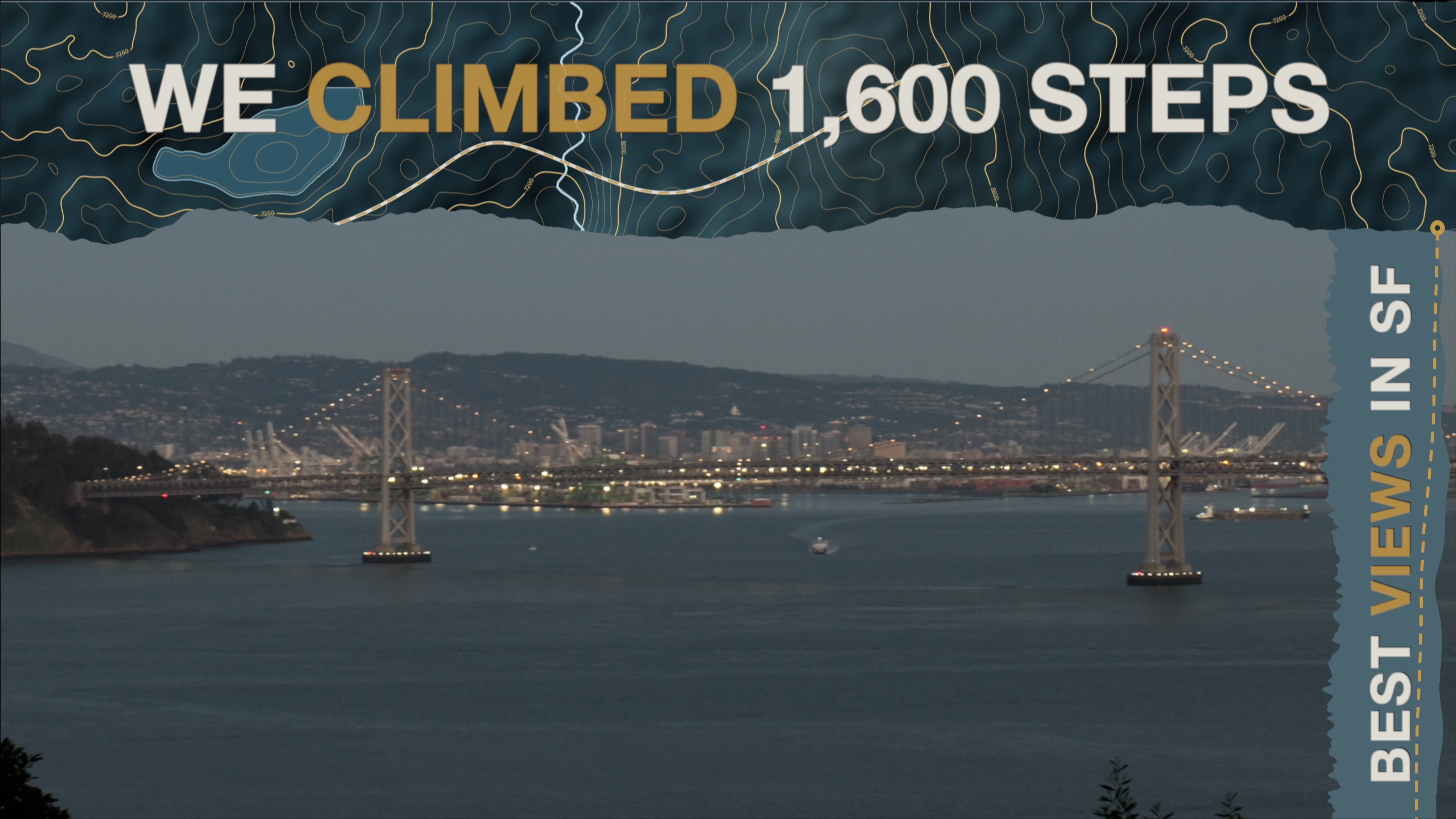
We climbed nine of them for a total of 1,600 steps. We didn't count the steps going down, just up. We didn't count the walking to get there or various stairs we may have climbed to reach the stairs filmed. We walked a lot. Climbed a lot. Filmed a lot. We were definitely tired by the time it got dark. But it was a great day and always fun climbing around San Francisco!
1. Tompkins Stairway — Bernal Heights
66 steps. The shortest climb of the day and the most 'out of the way'
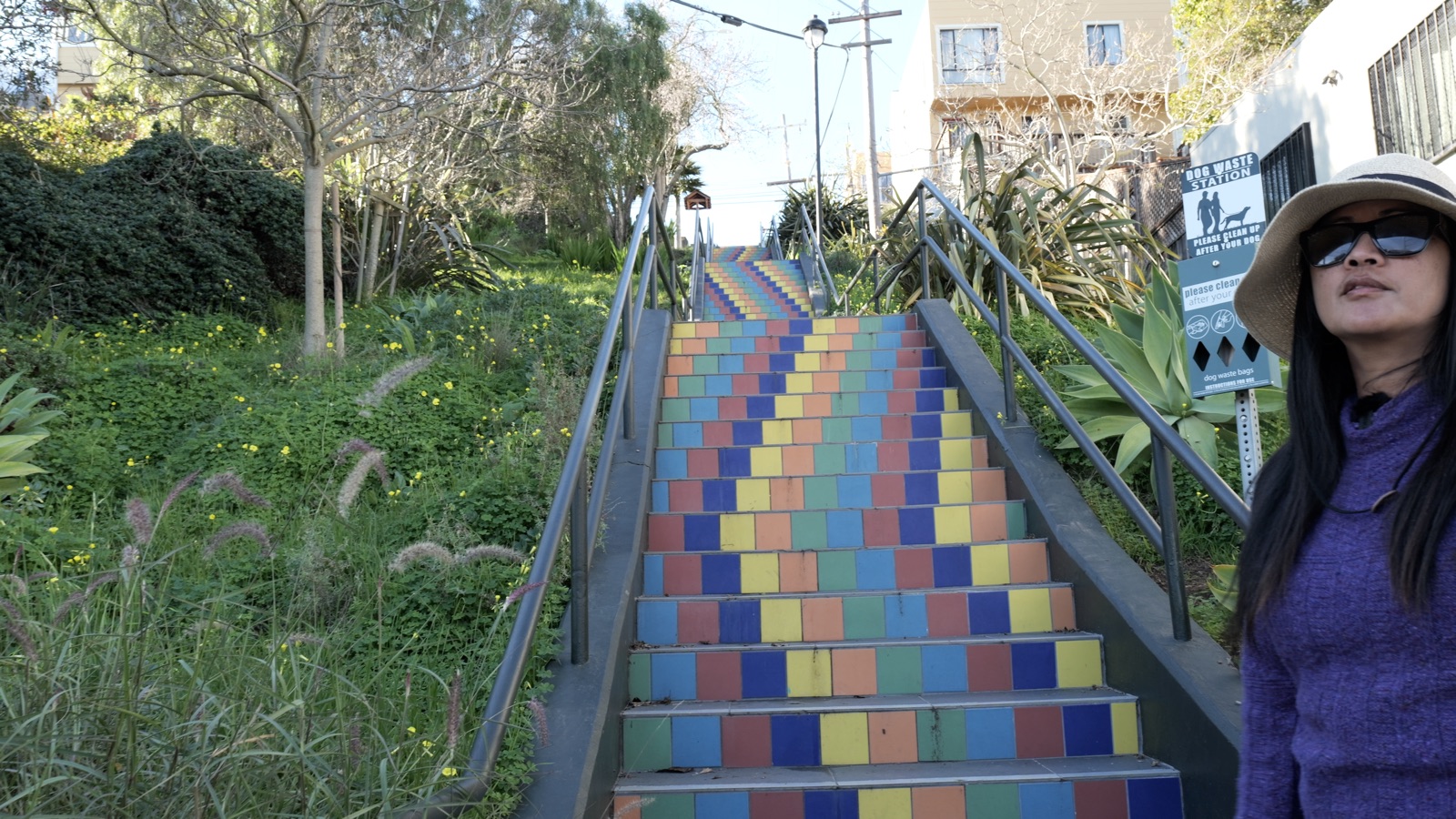
This stretch of Tompkins Street, between Putnam and Nevada, was for years an unaccepted street — meaning the city didn't maintain it. What that produced was a trash heap: weeds, illegal dumping, and a hillside nobody wanted to walk past.
The neighbors fixed it themselves. They banded together, cleaned it out, and turned it into a landscaped garden around a brightly tiled zigzag stairway. The neighborhood threw an inaugural party with their district supervisor when it opened.
And they're still at it. Volunteers meet the first Saturday of every month, 9 a.m. to noon, to weed, trim, and clean up the garden. We happened to arrive on a cleanup day and got to talk to people mid-work, which is the sort of thing you can't plan.
It's a small staircase. It's also the clearest proof on this list of what a neighborhood can do when the city won't.
2. Vulcan Stairway — Corona Heights
210 steps. The famous one, and it earns it.
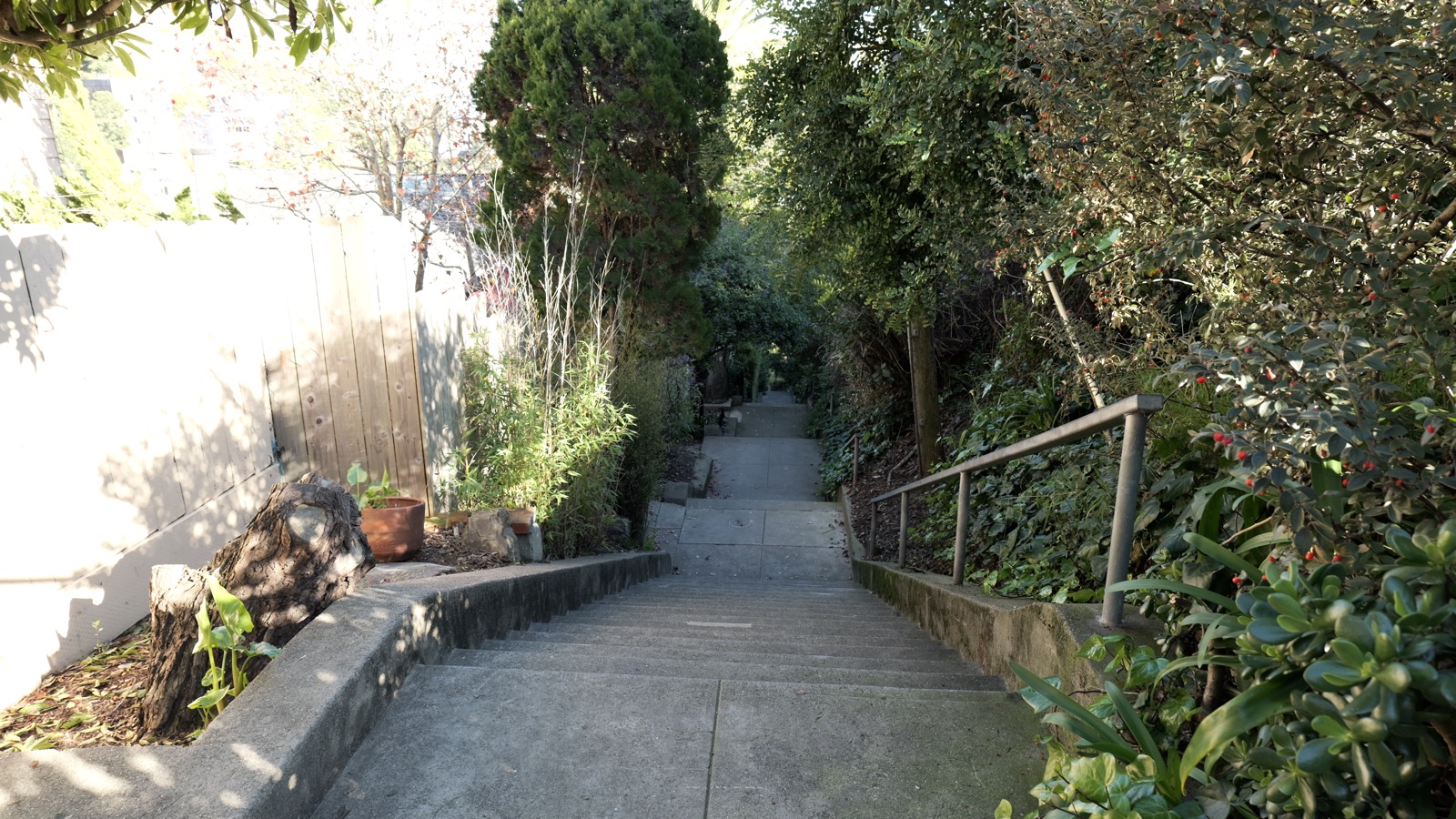
Roughly two city blocks, connecting Levant and Ord streets on the northwest slope of Eureka Valley. Originally laid out on October 23, 1925, and built mostly of concrete.
This one feels like a secret. It's lined on both sides by dense gardens — in stretches it reads more like a forest than a city block — with distinctive homes that can only be reached on foot. The steps split into two paths partway up and reconnect near the top via a short wood-plank trail.
It's also genuinely shady, which makes it one of the better options on a hot day when you still want the workout.
The name is what everyone asks about: Vulcan, the Roman god of fire. The neighboring stairway is Saturn. And there's a real street sign for Vulcan even though there's no street — just stairs.
Standing at the bottom, the thought that kept coming back was the delivery drivers. Every package on this block gets carried up by hand.
The Vulcan Stairway makes a good pedestrian shortcut between the Castro and Haight-Ashbury, and Saturn Street Steps are a short detour away if you want both.
3. 16th Avenue Tiled Steps — Golden Gate Heights
163 steps. The famous one, and it earns it.
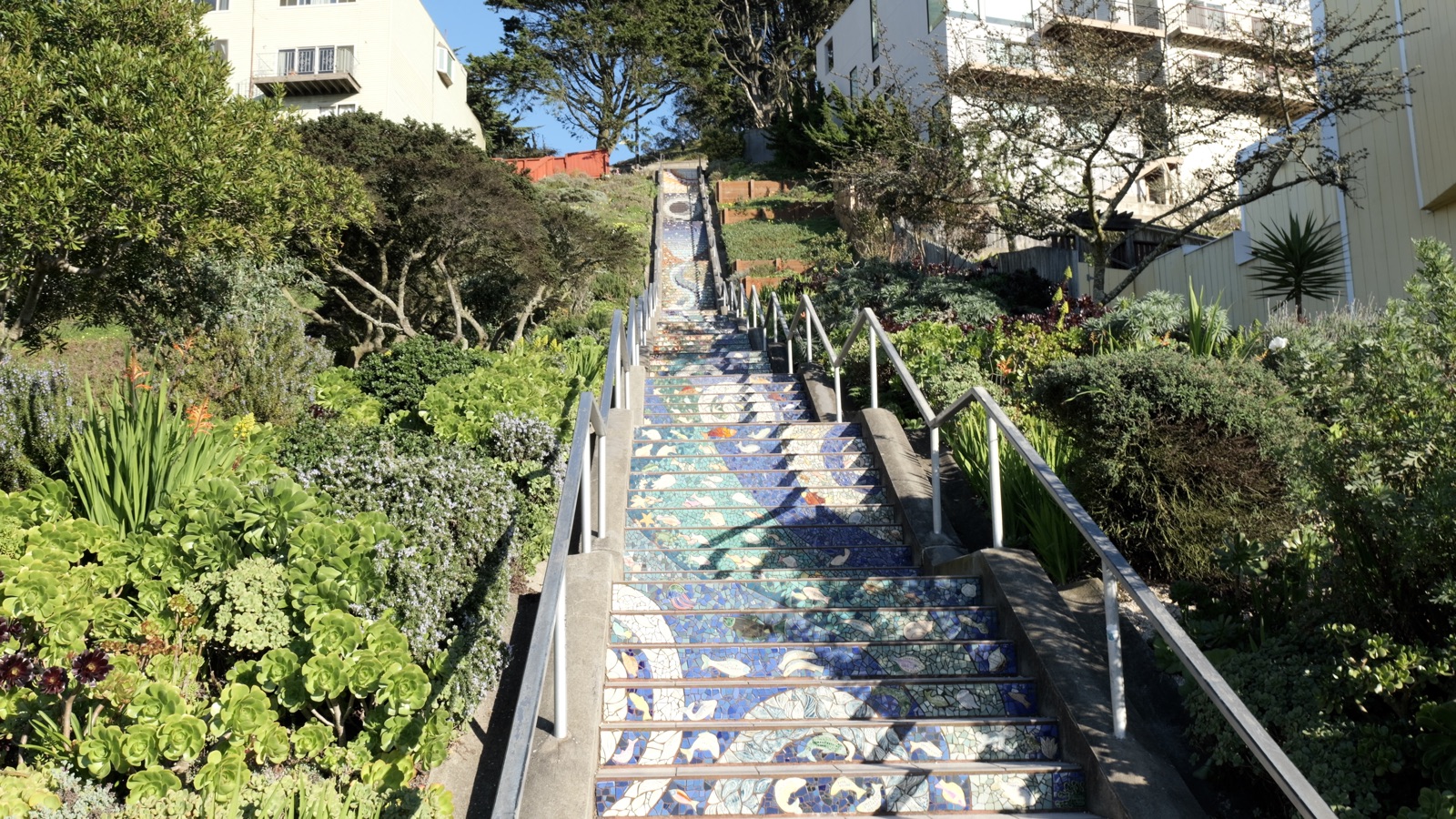
The concrete stairway dates to 1928. In 2003, neighborhood residents Jessie Audette and Alice Yee Xavier started a grassroots effort to beautify it, inspired by the Selarón Steps in Rio de Janeiro. Neighbors chose artists Aileen Barr, an Irish ceramicist, and Colette Crutcher, a San Francisco mosaic artist, to design 163 mosaic panels.
The scale of the community effort is the real story:
- Over two and a half years of fundraising and lobbying city government
- Over 300 volunteers involved in making the panels, across three public workshops
- Over 220 neighbors sponsored handmade named tiles — shaped like animals, fish, and shells — and that sponsorship funded most of the project
- Over 2,000 handmade tiles and roughly 75,000 fragments of tile, mirror, and stained glass
The design runs sea to sky: ocean creatures at the very bottom, then land animals, then birds, rising to the moon and sun at the top. Climbing it in order is the whole point — start at the bottom.
It opened on August 27, 2005, with lion dancers running up and down the steps, firecrackers, and the mayor of Caltagirone, Italy — home of the Scala Steps, this stairway's sister — cutting the ribbon. The acting mayor declared it "16th Avenue Tiled Steps Day."
The gardens flanking the steps are worth as much attention as the mosaics. They're full of succulents and California natives, including plants added in 2014 to support the endangered green hairstreak butterfly.
Go on a clear day. From partway up you can see straight out to the Golden Gate.
4. Grand View Park — Right Above the Tiled Steps
140 steps. The one for the view
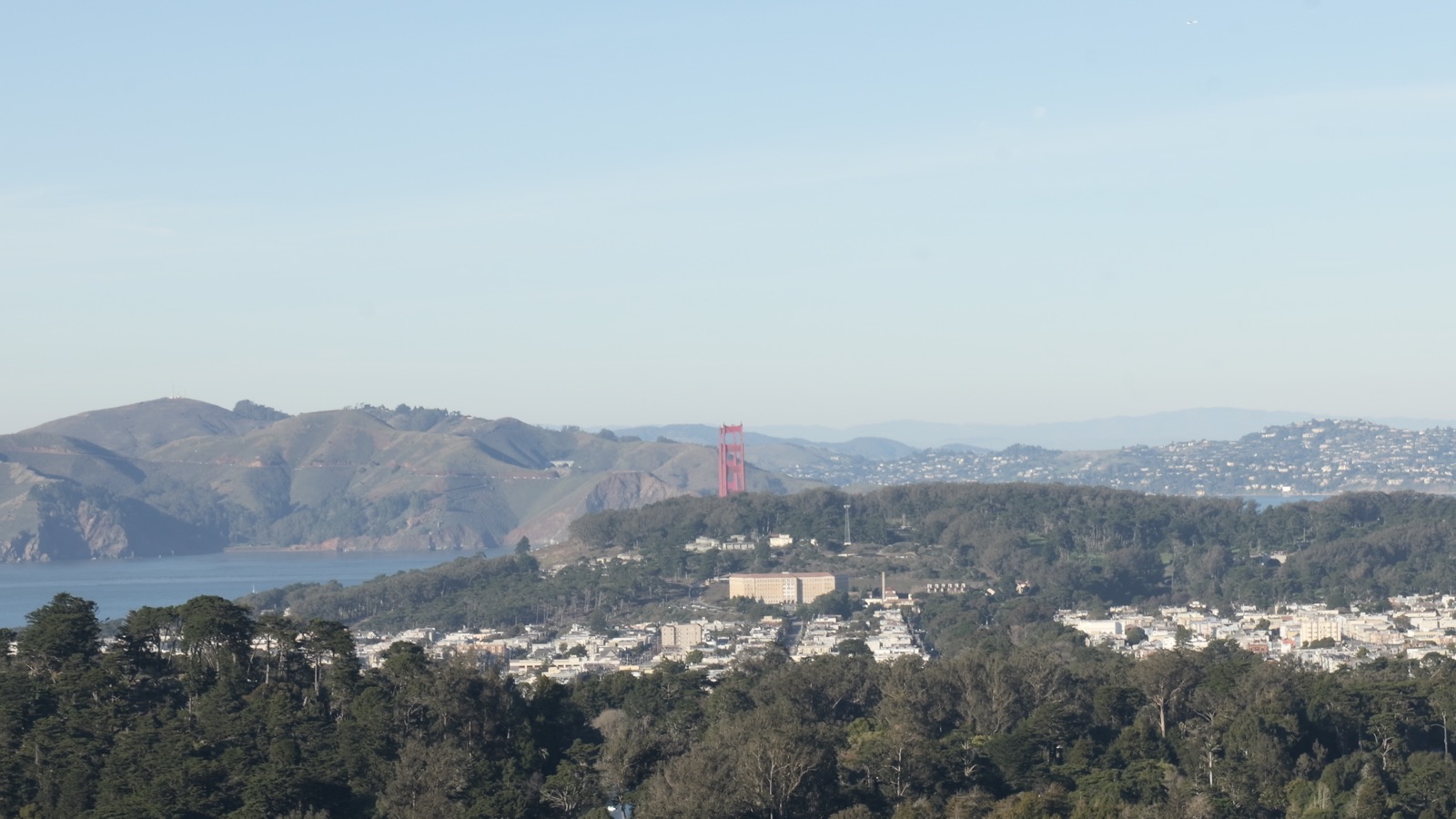
Do not stop at the top of the tiled steps. Keep going.
The stairs continuing up to Grand View Park are plain concrete — no mosaics, nothing photogenic. What's at the top is a genuine 360° view of San Francisco: downtown, the Golden Gate Bridge, Angel Island in the distance, and the full green sweep of Golden Gate Park running from the middle of the city all the way to the ocean.
These upper steps are also shady, which makes this another good hot-day exercise option. Watch your footing — they're steeper and less maintained than the tiled section below.
This is the best view of the day, and it's about five minutes past where most visitors turn around.
5. 15th Avenue Steps — 15th Avenue at Kirkham
207 steps. The step-brother of Hidden Garden
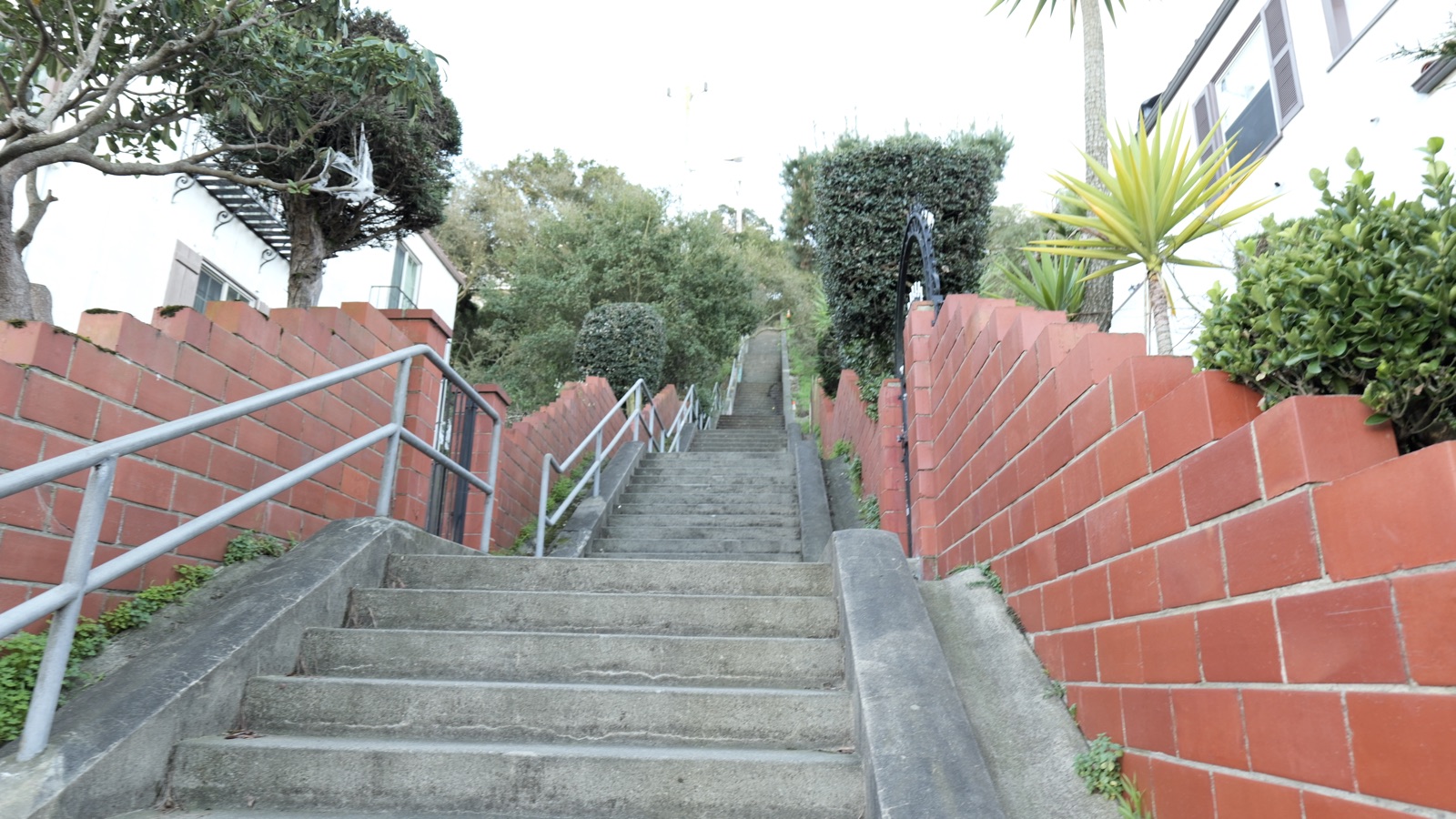
One block east of the Hidden Garden Steps, with its base at Kirkham Street, this is the quiet one — and the one almost nobody photographs.
There's no mosaic here. What there is instead is a designated natural area, managed by San Francisco Recreation & Parks, where native oaks cling to the steep hillside alongside the stairway. That oak habitat supports both resident and migratory birds, which makes this the most alive-feeling staircase of the day. You hear it before you notice why.
The view looking out is a good one: St. Anne's Church, the Inner Sunset spread out below, and Golden Gate Park beyond it.
We came down these after Grand View Park and looped back up the Hidden Garden Steps, which is a route worth stealing. The two stairways run roughly parallel, a block apart, and walking down one to climb the other turns three separate stops into a single continuous loop — no backtracking, no moving the car. For the record these stairs are not counted in our total step count since we did not climb up them.
It's also a useful counterpoint. After two tiled staircases in a row, a plain set of concrete steps under oak trees is a reminder that most of San Francisco's 900-plus stairways look like this. The famous ones are the exception.
6. Hidden Garden Steps — 16th Avenue at Kirkham
148 steps. The tiled steps' less-famous sibling, three blocks away, and our favorite of the two.
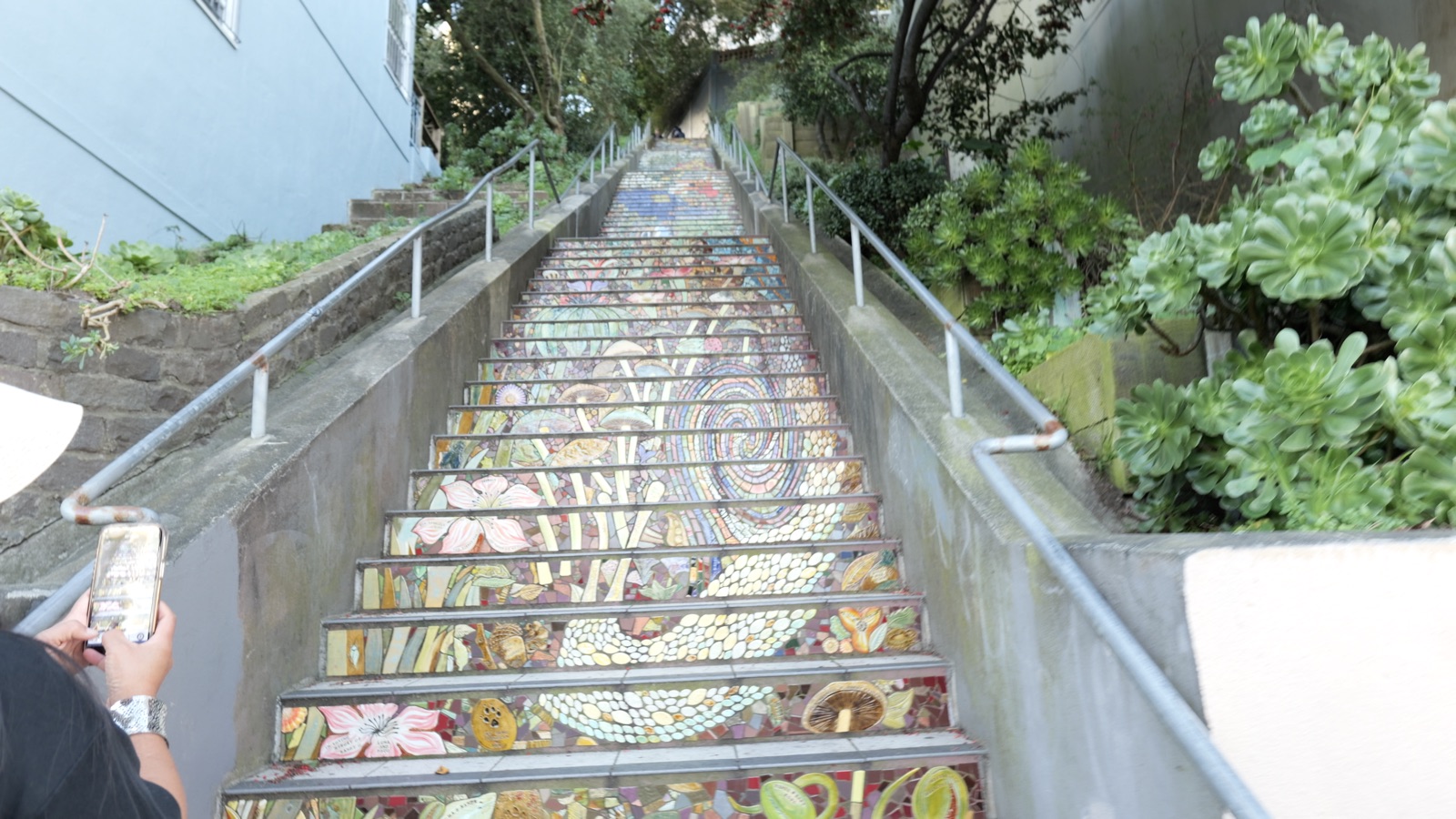
The concrete stairway was built in 1927. By the 2000s it had a reputation as dark, damp, and unpleasant — the fundraising campaign's own tagline described it as "slightly scary." The same artists from the 16th Avenue steps, Barr and Crutcher, designed the mosaic, and it was unveiled on December 7, 2013.
Where the 16th Avenue steps go sea-to-sky, this one is all California: native flora and fauna, poppies, oaks, bears, butterflies, dragonflies, snails, and a salamander that stretches across 26 steps. It also pays homage to the firefighters of San Francisco's Station 22.
The thing worth saying out loud, and the thing that makes both of these staircases more impressive than they first appear: this wasn't a city project. It wasn't city-funded. Neighbors raised the money and did the work. A thriving succulent garden along both sides is still maintained by community volunteers.
It's less crowded than its famous neighbor and, to our eyes, just as good.
7. Lyon Street Steps — Pacific Heights
Roughly 332 steps climbing between Broadway and Green, along the eastern edge of the Presidio, connecting Cow Hollow to Pacific Heights.
This is the city's unofficial outdoor gym. Locals call them the exercise stairs, and on any given morning they're full of people running repeats. The stairway itself is formal and manicured — clipped hedges, tended gardens, balustrades, landings — and it runs past some of the most expensive real estate in San Francisco.
We parked at the Broadway and Lyon entrance by the Presidio gate. The view from the top back over the Marina and the bay is the reason to come.
8 & 9. Greenwich Steps and Filbert Street Steps — Telegraph Hill
For our filming these are the counts: Greenwich lower steps roughly 200 steps Filbert upper steps roughly 300 steps
The two Telegraph Hill staircases climb from Sansome Street up to Coit Tower, and their bases sit only about 500 feet apart. Locals treat them as a loop: up one, down the other. We did a zigzag up and down. Started at the bottom of Greenwich Steps and climbed to Montgomery Street where we crossed over to the Filbert Street Steps. We climbed the top half of Filbert Steps to Coit Tower and slowly made our way around Telegraph Hill. We followed our same pattern and walked down Greenwich Steps to Montgomery Street where again we crossed over to Filbert Steps and descending down to our final spot.
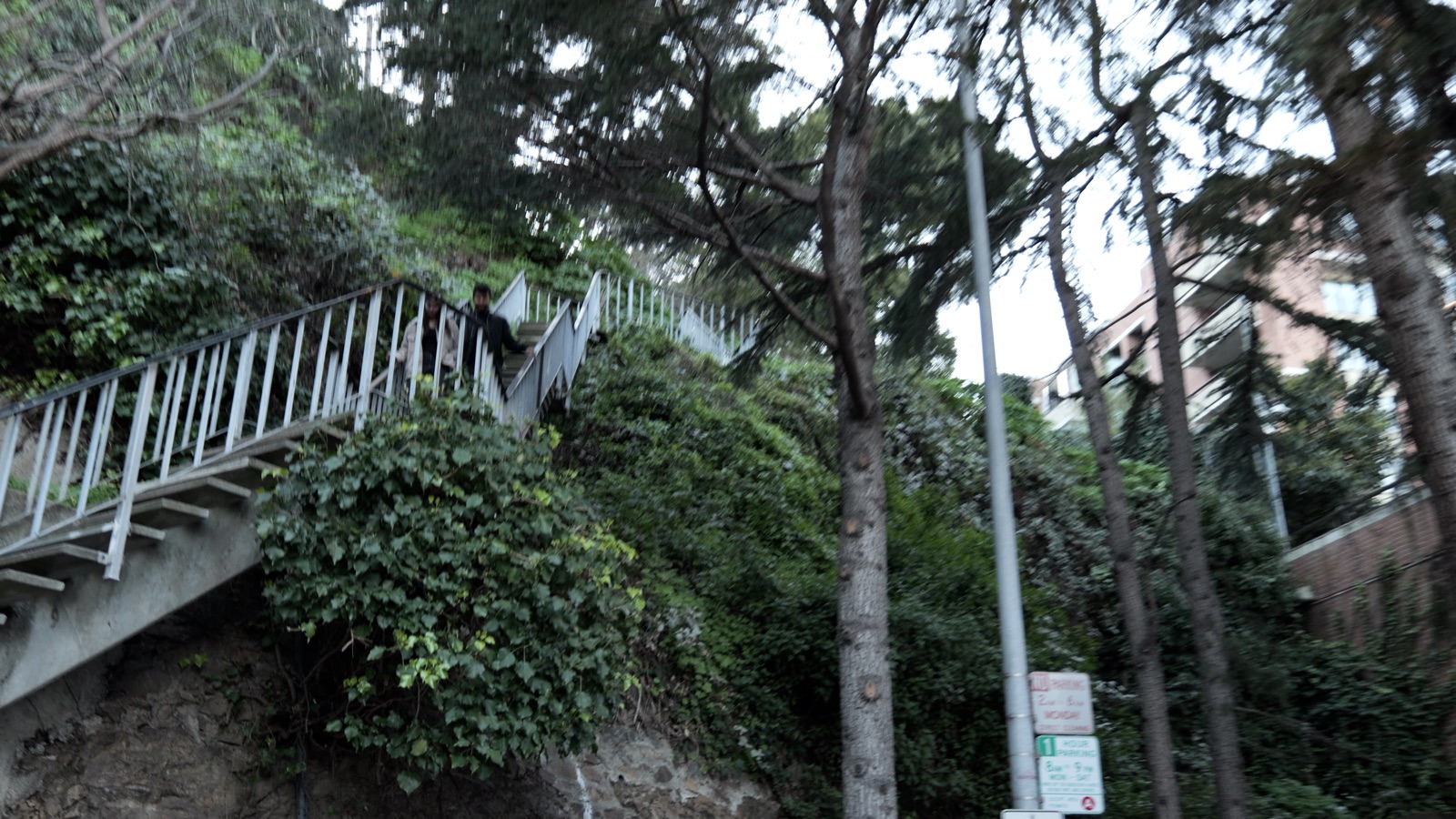
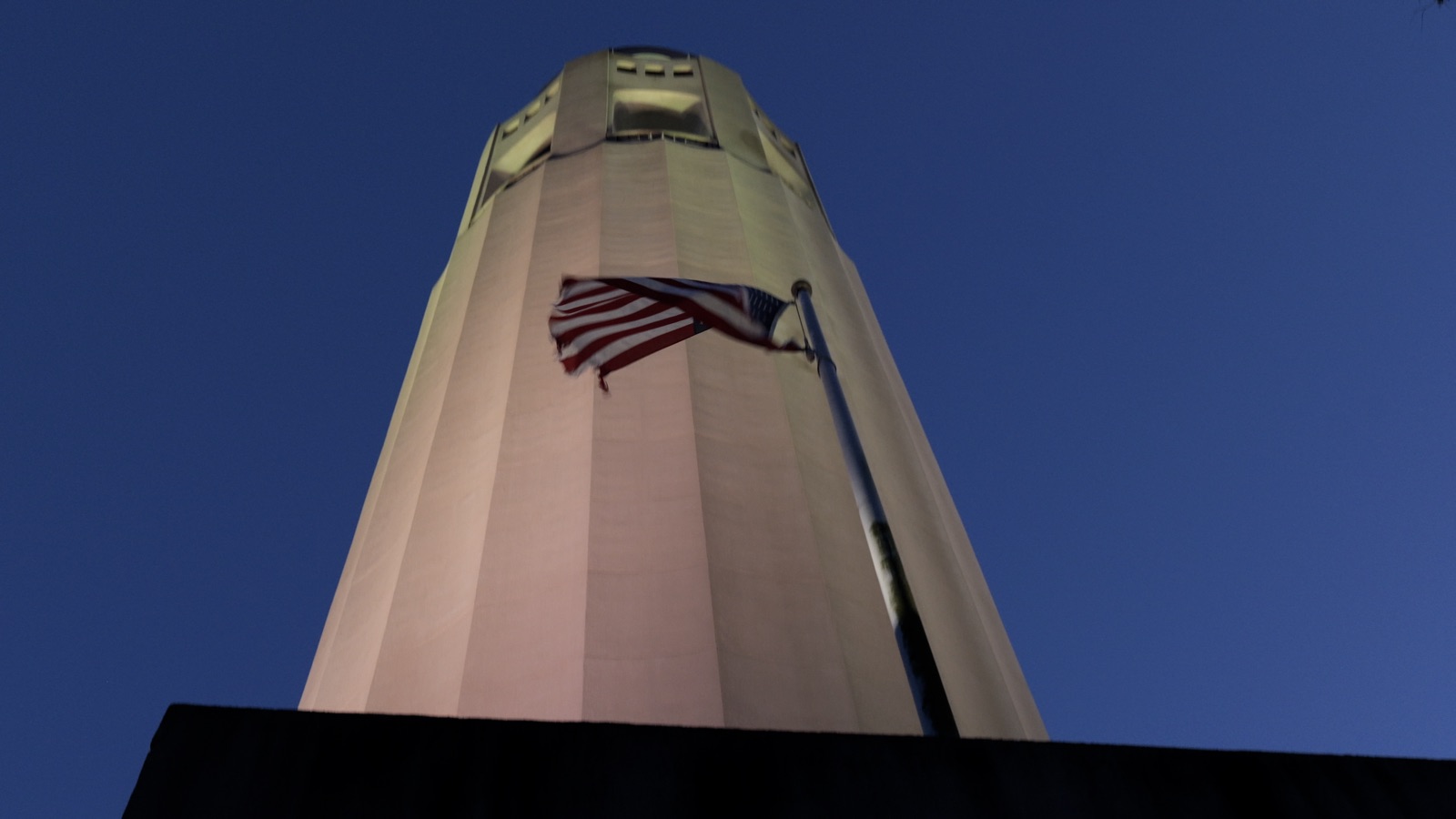
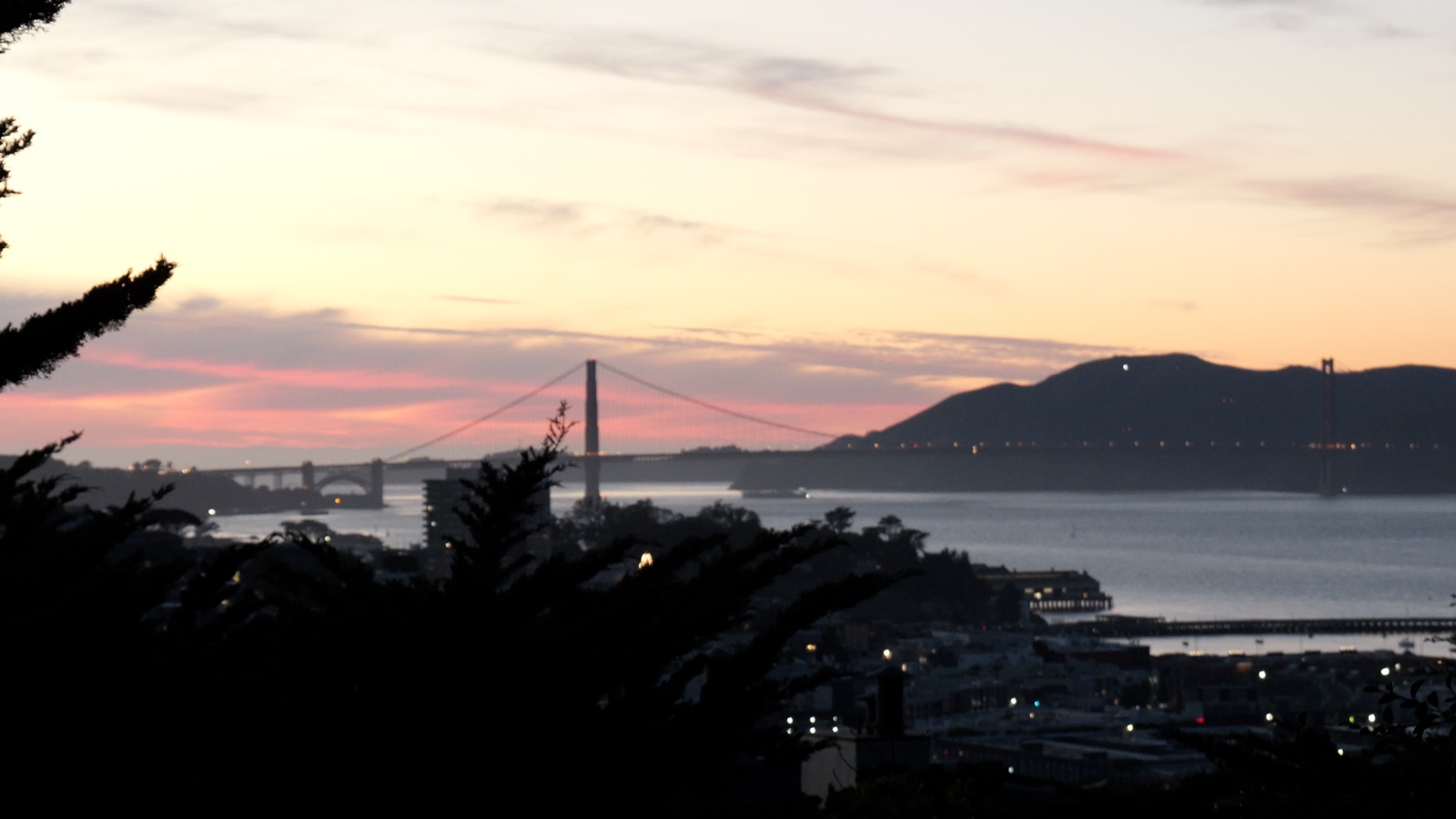
Filbert Street Steps — roughly 385 steps (some counts run higher depending on where you start and stop). Steeper, more open, concrete and steel, with a more modern feel. It passes Napier Lane, a wooden boardwalk lined with 1850s cottages, and ends at the southern peak of Pioneer Park.
Greenwich Steps — less steep and shorter than Filbert, built more into the hillside, and it delivers you right at the entrance to Coit Tower.
Both are lined with gardens that residents have maintained for decades. Both are home to Telegraph Hill's wild parrots, which you'll usually hear before you see.
Neither is mosaic-tiled. Neither needs to be — the view does the work. As Dan put it at the top: these aren't the pretty ones, but you'd climb stairs for a view like that.
If you're climbing Coit Tower itself, that's another 234 steps from the tower's base. Doing all three in one go puts you over a thousand steps.
Planning Your Own Staircase Day
Group them geographically. The nine sit in four clusters, and driving between them in the wrong order eats the day:
| Cluster | Staircases |
|---|---|
| Bernal Heights | Tompkins |
| Corona Heights / Upper Market | Vulcan (+ Saturn nearby) |
| Golden Gate Heights / Inner Sunset | 16th Avenue Tiled Steps, Grand View Park, 15th Avenue Steps, Hidden Garden Steps |
| Pacific Heights | Lyon Street |
| Telegraph Hill | Filbert + Greenwich |
The Inner Sunset cluster is the most efficient stop — three staircases and the best view, all walkable from each other. If you only have a few hours, do that one.
Other practical notes:
- All of these are free and open to the public. No tickets, no permits, no hours.
- Start at the bottom of any tiled staircase. The artwork is designed to be read going up.
- Parking is street parking everywhere. The Inner Sunset cluster has reasonable free roadside parking; Telegraph Hill is easiest from the paid lots near Levi's Plaza.
- These are residential neighborhoods, not attractions. People live on these steps — several of the homes have no other access. Keep your voice down, stay off private paths and gates, don't block the stairs for photos, and pack out what you bring.
- Go on a clear day if you can. Fog will erase the views at Grand View Park and Telegraph Hill entirely.
- Layer up. You'll be sweating on the climbs and cold at the top when the wind picks up.
- A full day is realistic for all eight, but it's a lot of driving. Two half-days is more pleasant.
⚠️ A Note on Conditions
These are public stairways, not maintained trails. Steps vary from freshly tiled to cracked and uneven, handrails aren't universal, and several sets get slick in fog or after rain — the plain concrete flights above Grand View Park especially. Wear shoes with grip. Take the climbs at whatever pace suits you; there's no schedule here and the steps aren't going anywhere. If you're visiting at dusk, note that most of these staircases have little or no lighting and run between residential properties. Be mindful of residents' privacy and property throughout — for many of these homes, the staircase is the front walk.
Gear Used For This Trip
An urban day is easy on gear, but San Francisco's light is not — bright at the top, deep shade in the garden stretches, and fog that flattens everything. Please consider clicking and checking these out — it helps our channel.
-
Camera Setup: Some of the gear we used for this video
- 4K Camera for this Shoot – Handled the swing from shaded stairways to blown-out city views, and the low light on the last climbs as it got dark.
- Durable Tripod – Fairly lightweight, but definately durable.
-
Footwear: Hiking Boots – Over a thousand steps in a day makes the shoes matter more than you'd expect for a city walk.
-
More Stuff: More of Our Favorite Gear – These are items we use regularly, some we even review for you!
Affiliate Disclosure: Some links above are affiliate links. As an Amazon Associate or affiliate partner, Our Own Route may earn a commission on qualifying purchases at no extra cost to you.